Science & Nature
After Artemis II, NASA Charts Path to the Moon and Beyond
NASA’s 10-day Artemis II mission showed off the rigor and precision that has made the agency a household name.
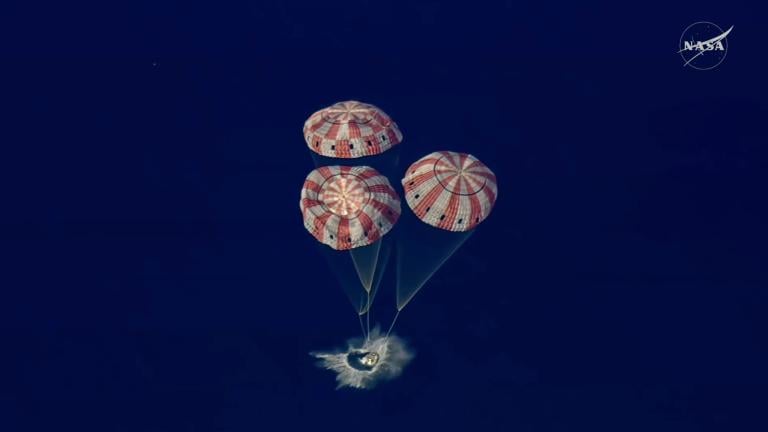
When the Orion spacecraft hurtled back to Earth earlier this month, it reached speeds of more than 25,000 miles per hour and withstood heat up to 5,000 degrees Fahrenheit. It splashed down in the Pacific Ocean, at a time scientists predicted down to the second, after sending four humans on a journey over a quarter of a million miles.
With another successful mission under its belt, it’s looking like the space agency might be ready to take the next steps in human space exploration. And the public is ready to see what those steps might be.
“The wonder that exploring space brings about, I see that on people’s faces every day at my work,” said Hunter Miller, a public observing educator at the Adler Planetarium.
Artemis II was one stepping stone toward NASA’s plan of building a permanent base on the moon, where astronauts haven’t been since 1972. But in that time, a lot has changed here on Earth.
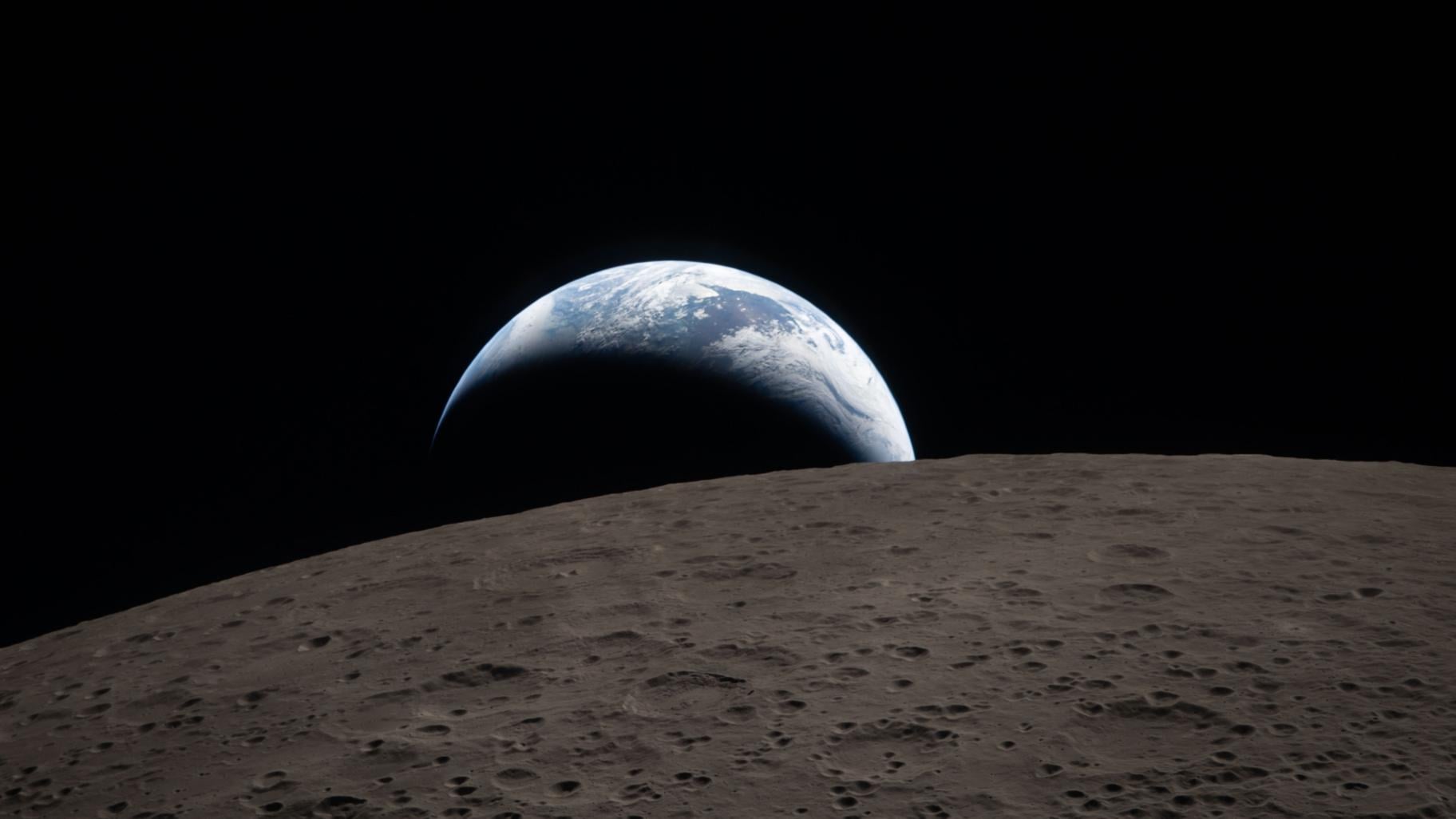 Photo of the surface of the moon, with Earth in the background, taken by the Artemis II mission. (Courtesy of NASA)
Scientists have learned from remote-piloted exploration of the universe, including space telescopes scanning outside of our own solar system. Meanwhile, private companies are expanding their presence in space.
A new era of space exploration is underway. And at this pivotal point, many are looking at the expertise, cooperation and funding that NASA needs to meet its goals.
Back to the Moon
While the Artemis II mission served mainly as a test of the Orion spacecraft, there are plans to put boots on the ground of the moon not too far in the future.
Artemis III in 2027 will give astronauts the chance to test out docking with a new lunar lander while in Earth’s orbit. And Artemis IV, planned for 2028, will mark the official return to the moon’s surface.
“It is absolutely soon, but when you have things like Artemis II that have launched, they’re using very similar technology, … there’s a lot of moving parts for these missions, but they always like to project their most positive outlooks,” Miller said.
Returning to the moon begs the question — what will we do once we’re up there?
Charles Mudd, an attorney who specializes in space law, said a combination of international treaties and domestic regulations set the framework for what is allowed in space.
The Outer Space Treaty of 1967 sets the basic framework for what countries can and can’t do in space. It defines outer space as “the province of all mankind,” and prevents claims of national sovereignty over the moon and other celestial bodies.
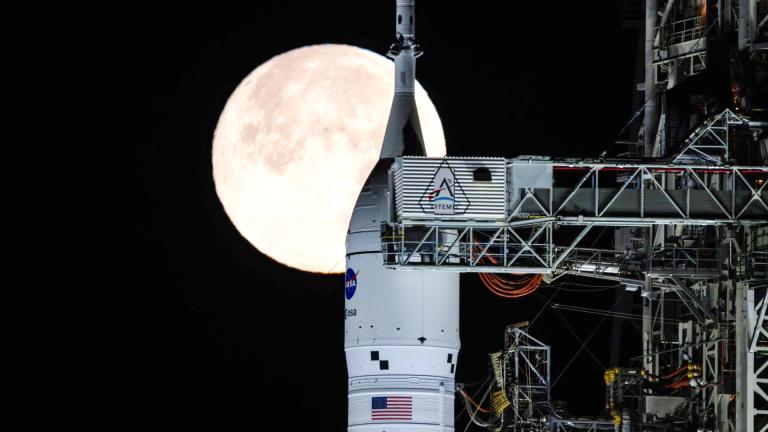
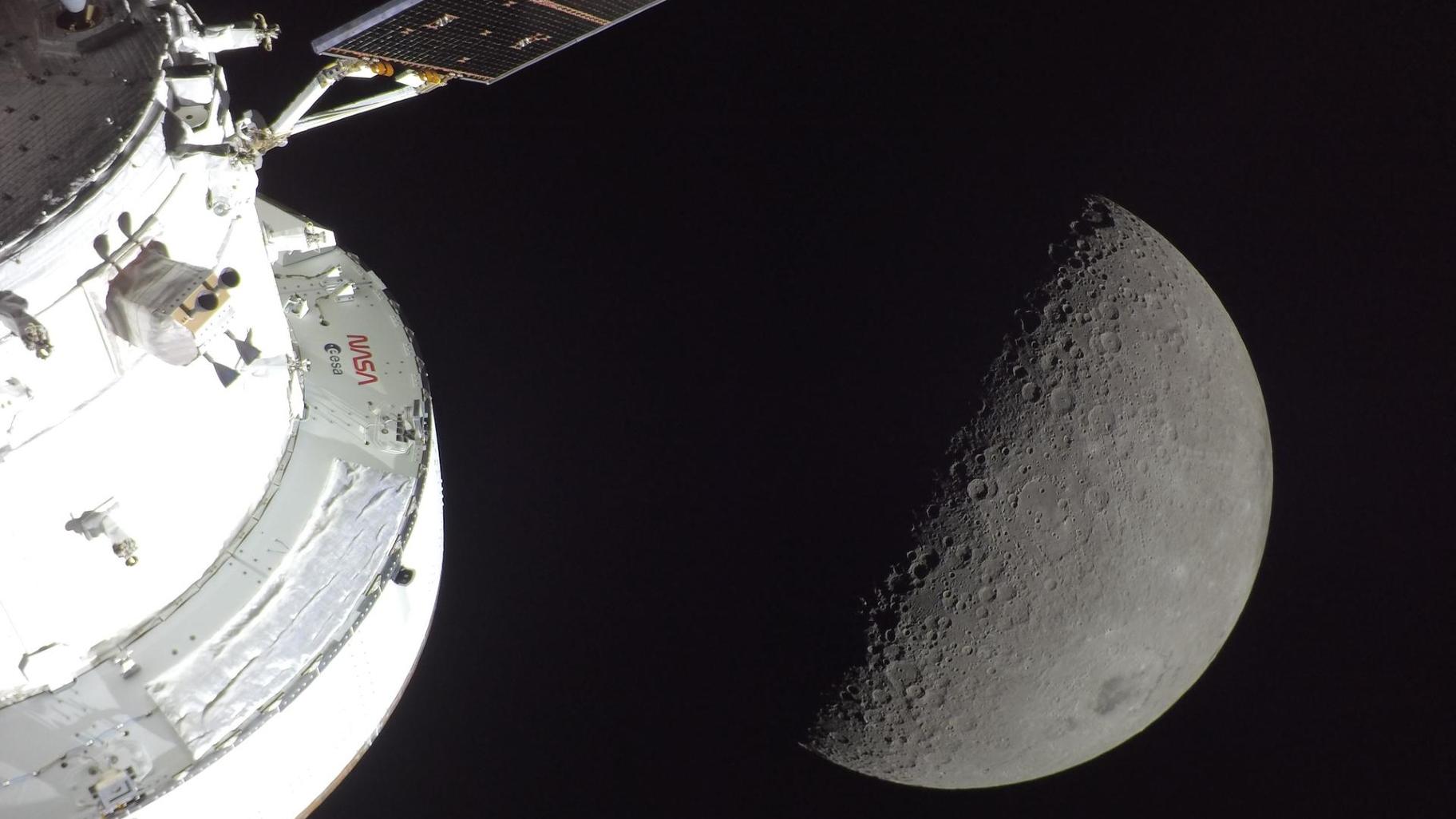 The moon appears next to the Orion spacecraft. (Courtesy of NASA)
Meanwhile, the U.S. and many other countries have not signed onto a more recent treaty known as the Moon Agreement.
“One of the main reasons for that is that the Moon Agreement went beyond the Outer Space Treaty and said that nobody could own minerals, or anything mined or extracted from the moon,” Mudd said.
Instead, the U.S. put forth the Artemis Accords in 2020 to govern civil exploration of the moon, which 62 countries have signed on to so far.
With the Artemis Project, however, NASA is taking a more cooperative approach than in previous journeys to the moon.
Building a moon base will require more landings on the moon than the agency is capable of carrying out on its own, according to Miller. In order to achieve the goal of building a moon base, NASA is planning on partnering with private companies to shuttle supplies.
In addition to private-public partnership, NASA is also expanding its work with international partners.
“This is really a mission for the entire world, it is something that can only be accomplished with that cooperation, because these are much more challenging goals than we’ve ever accomplished in space exploration,” Miller said.
Exploring the Cosmos
While the moon may be the gateway for human travels into outer space, it only represents a tiny fraction of what’s out there.
Allison Strom, a professor of physics and astronomy at Northwestern University, is leading a team that will guide development of the Habitable Worlds Observatory, one of NASA’s next flagship science missions.
Studying Earth-like planets around the universe can be tough. The planets are relatively faint and difficult to see, compared to the bright stars they orbit.
Strom said the Habitable Worlds Observatory will act like a “super Hubble,” looking at ultraviolet light to observe these planets in greater detail.
“It will answer, really for the first time, this pressing question that we have,” Strom said. “Are we alone in the universe?”
Meanwhile, images are still coming back from the James Webb Space Telescope, which is less than five years into its mission. As scientists look over the data, giving insight into other galaxies, they’re making surprising findings about how our universe is aging.
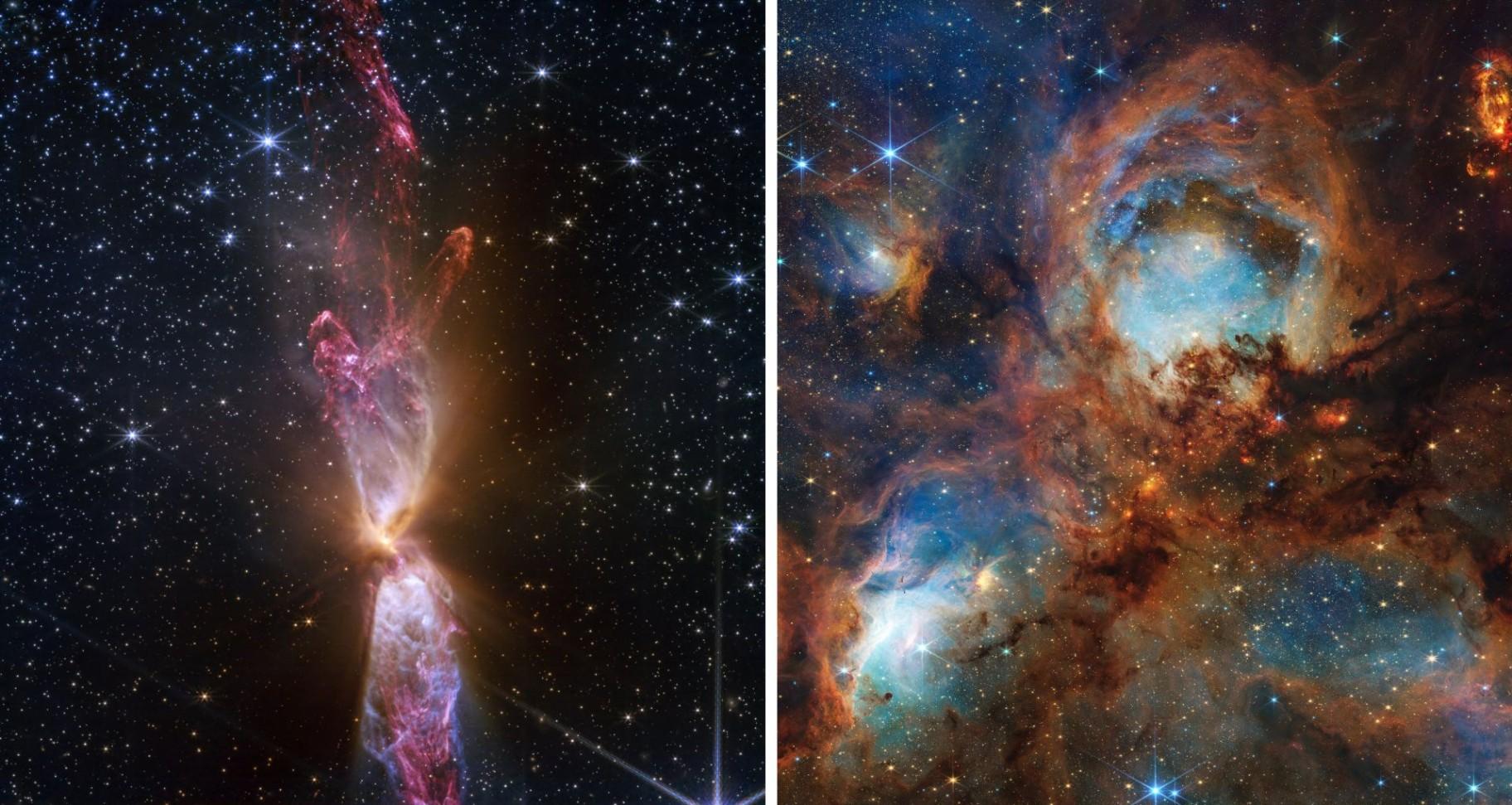 Images taken by the James Webb Space Telescope. (Courtesy of NASA)
“We see that (the very first galaxies) are a lot more mature than we expected,” Strom said. “It’s like looking back and expecting to see infants, and seeing toddlers instead. What we want to understand is what’s driving this … and maybe this will help us understand the origin of our own galaxy, the Milky Way.”
Despite what we’ve learned from them, some of NASA’s science initiatives are at risk of losing funding.
The president’s budget request for fiscal year 2027 proposed increasing funding for space exploration by 9%, while cutting funding for science by 46% compared to 2026 levels. Overall, the budget request proposes cutting NASA funding by 23%.
These funding cuts could not only affect ongoing projects but also hamper our ability to train future generations of scientists, according to Strom.
But with the excitement surrounding outer space, Strom is hopeful the public will see the value in the investment.
“I did a quick calculation earlier, I think the whole budget of NASA — science plus space exploration — works out to about one coffee per month per American,” Strom said. “And I think that’s a pretty good deal.”